
The BIG QUESTION I want you to be thinking about as you read this week is: How do beliefs shape civilizations?
HERE IS THE LINK TO YOUR NOTECARDS
READ/UNDERSTAND:
AS ALWAYS, take notes! Make it fun! Make it pretty! Enjoy taking notes because you know me and my love for Quuiizzzz Timmmeeee! You may or may not be asked to hold up your notes in class as evidence of your awesomeness at following instructions.
Read the following chapters in Story of The World:
- Christianity in Britain Ch 3
- Byzantine Christianity Ch 4
- Rise of Islam Ch 6 and 7
- Crusades Ch 18
- Reformation Ch 34 and 36
Watch the following video: Fun video that illustrates Martin Luther’s story
TIMELINE:
Add these dates to your timeline. We are entering an era where we can be more exact about dates but you’ll still see some include the “c.” before the year which stands for “Circa” meaning “around or approximately.”
Remember to fill out the left and right side pages! The left page is great for blurbs, details that interest you and drawings/pictures (yes, make it look good!). We have primarily used the right-hand page for the reign of certain kingdoms, the length of wars or for one-time events that we want to see on the “Century at a Glance”
| AD 610 | Muhammad receives first revelations | Beginning of Islam |
| AD 632 | Death of Muhammad | Expansion under the caliphs begins |
| AD 638 | Jerusalem captured by Muslim forces | Major religious and political turning point |
| AD 711 | Muslims invade Spain | Islam enters Western Europe |
| AD 800 | Charlemagne crowned Holy Roman Emperor | Revival of Western Christian empire |
| AD 1054 | Great Schism | Christianity divides into Roman Catholic and Eastern Orthodox churches |
| 1095 | Pope Urban II calls the First Crusade | Beginning of the Crusades |
| 1096–1099 | First Crusade | Christians capture Jerusalem |
| 1187 | Saladin recaptures Jerusalem | Major turning point in the Crusades |
| 1189–1192 | Third Crusade | Richard the Lionheart and Saladin |
| c. 1450 | Gutenberg printing press | Makes the Reformation possible |
| 1517 | Martin Luther posts the 95 Theses | Beginning of the Protestant Reformation |
| 1534 | Henry VIII forms the Church of England | English Reformation |
| 1545–1563 | Council of Trent | Catholic Reformation (Counter-Reformation) |
DO THE FOLLOWING:
Do the following art project and writing assignment:
Watch this fascinating video about the history of illuminated manuscripts
Now you get to make your own illuminated manuscript page! We are doing this in the medieval style so do a quick google image search for illuminated manuscripts if you didn’t get enough ideas from the video. You can choose to do our scripture of the year in Ephesians OR choose a favorite scripture or quote (maybe one from your Armor of God project!)
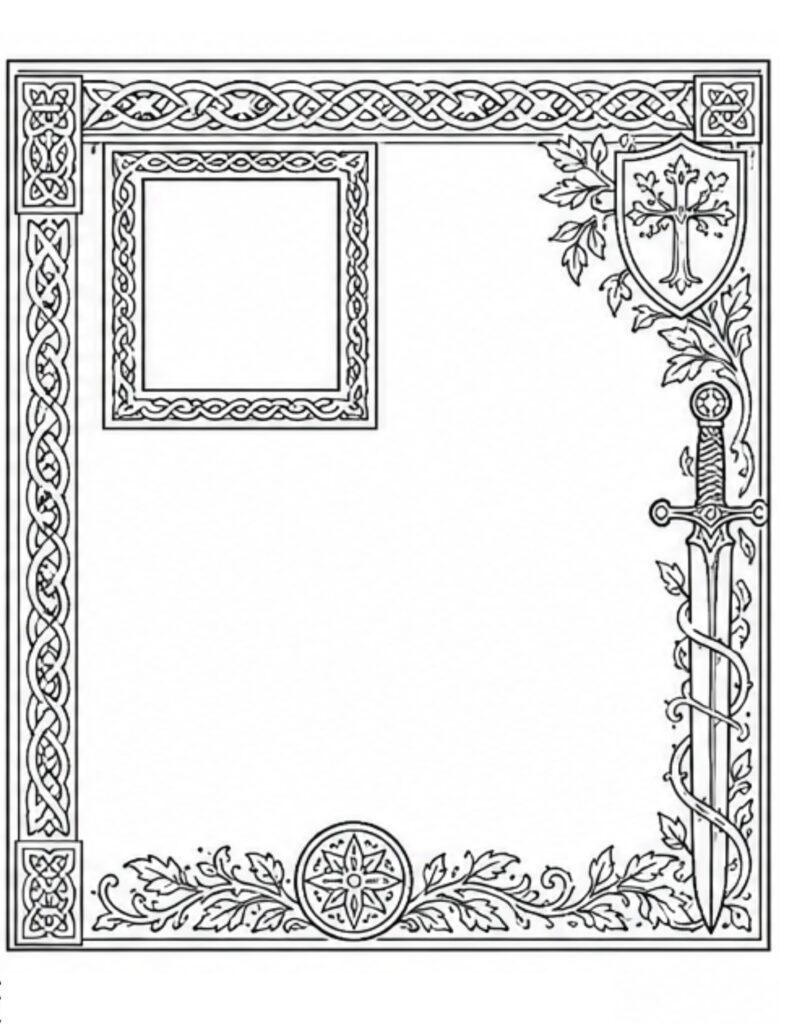
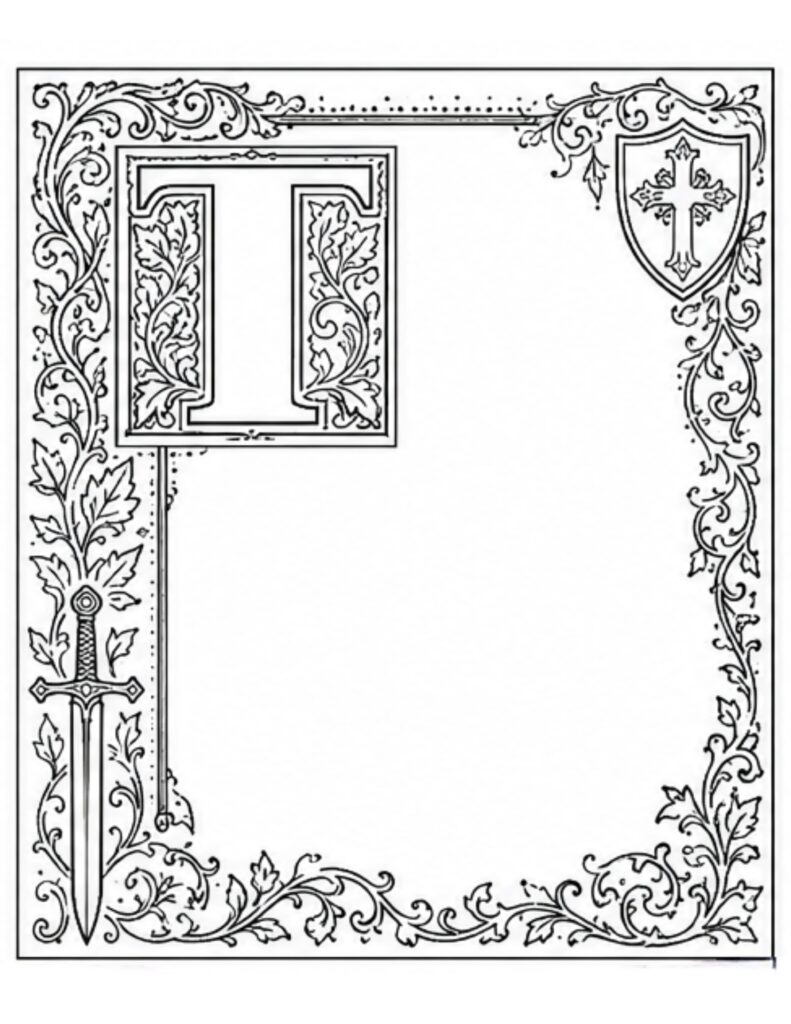
Make it decorative, include gold and/or silver elements so it has the “illumination!” If you are feeling zero percent artistic, I did have chat make templates that you can color and then use your best handwriting or calligraphy to write your scripture. Please don’t treat this like a kiddie coloring page, I am giving you an option if you hate to draw but I still want to see something beautiful that represents your best work!
Project parameters: Detailed edges, possibly illustrations but definetly patterns. The use of gold and/or silver. A quote or scripture in your fanciest handwriting.
You can print one of these templates if you would like:
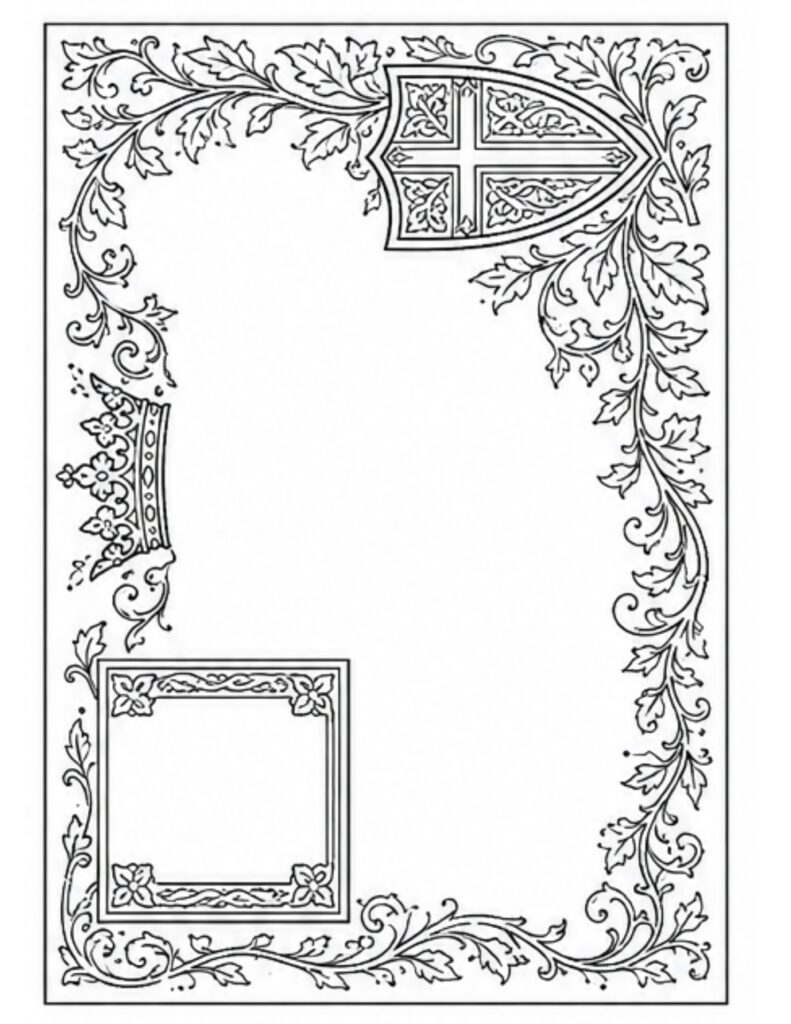
Writing Assignment: You will have a short writing prompt for every history class this year. I want you to write in your commonplace book about ONE of these two topics, you choose. I need to see 6-12 sentences, that’s all, this is an exercise to get you reflecting on your reading, NOT to create a research paper, so keep it to the point, short and sweet is great!
How can religious ideas unite people? How can they divide people?
Compare how Christianity and Islam influenced government, education, and daily life.
We will be sharing our thoughts in groups in class so come prepared!
ARMOR OF GOD- YEARLONG PROJECT

Watch this video to feel inspired before you start brainstorming your project.
You should have chosen your scriptures for our Armor of God project so now I want you to dream up the article of armor you will be creating and how you will incorporate your scriptures into this project.
Here is a quick brainstorm I came up with to help you think of what you want to create!
Helmet of Salvation, Head covering – medieval helmet, sports helmet (painted, doodled, covered in stickers you create), hat (bedazzled, embroidered, painted, designed, leatherwork), scarf (painted, embroidered)
Breastplate of righteousness, Chest covering: shirt (embroidered, screen printed, knit, crochet), sweatshirt (embroidered, screen printed), vest (sewn), medieval breastplate
Feed Shod with the Gospel of preperation of peace, Shoes: ANY kind of footwear (leatherwork, sew or crochet slippers, paint on tennis shoes)
Loins girt with truth: Belt (leatherwork and leather stamping, weaving), skirt , pants and shorts (sewn)
Shield of Faith, sheild: Jacket (sewn, embroidered), umbrella (painted) , medieval shield, coat
Sword or the Word of God, sword: Medieval sword (forged, purchased and etched), jewlery with sword motif?
And here are ideas for incorporating your scriptures into these articles of clothing:
Instead of simply writing scriptures on something, use symbolism in:
Color, texture, pattern, metal, gemstone, stitching, engraving, embroider, hidden messages, morse code, hebrew/greek word studies, meaningful numbers, layered materials, knots, feathers, leather, recycled materials
And for a concrete example if you choose to make a medieval shield it might have:
- 5 rivets representing five promises
- gold leaf representing divine power
- cracks repaired with gold (kintsugi symbolism)
- intertwined leather strips representing covenants
- hidden scripture references only visible inside
The symbolism becomes almost as important as the craftsmanship! That’s the goal. Quality craftsmanship and layers of symbolism!
I need you to be able to answer all of the following questions AND have talked it over with your mom to get her approval since she will likely be funding your project 🙂 Write down the answers in your commonplace book and be prepared to share with the class so we can all get excited about your project! If you would like to print this page and write your answers on it then tape it into your commonplace book then you can CLICK HERE for the printable sheet. And don’t forget to DREAM BIG! I want to look at this project and say WOW!
1. What will you create?
- Which piece of the Armor of God will you represent?
- What type of article will you make? (helmet, breastplate, shield, belt, shoes, sword, etc.)
- Will it be something you can actually wear/use, or primarily a display piece?
- Will you create a traditional interpretation or a creative/modern version?
2. What does your piece represent?
- What does this piece of armor symbolize spiritually?
- What does it protect you from?
- How does it help a disciple of Christ?
- What would this look like in your everyday life?
3. What scripture will you incorporate?
- Which scripture(s) will be connected to your piece?
- Will you put the actual words on the armor?
- Could the scripture influence the design, rather than simply being written on it?
- What words, symbols, or images could represent the scripture?
4. What will you need to learn?
- Is there a skill you don’t currently have?
- Do you need to learn sewing, leatherworking, woodworking, metalworking, painting, sculpting, 3-D printing, welding, graphic design, etc.?
- Is there someone who could teach you?
5. Will you need a mentor?
Consider whether you need help from a parent, teacher, friend, expert to complete this project.
6. What materials and supplies will you need?
Make a preliminary list:
- Main materials, tools and special equipment
Then ask: What do I already have, and what will I need to obtain?
7. What will it cost?
- What is your estimated budget?
- Can you repurpose or thrift materials?
- Is there a cheaper way to accomplish the same idea?
- Are you asking your family to purchase something expensive?
8. How much time will it take?
Think backward from the final presentation date.
- What needs to be done first?
- What steps will take the longest?
- Do you need time for drying, sewing, painting, ordering materials, or learning a skill?
- What could go wrong and require extra time?
9. How will you make it your own?
Your project shouldn’t simply be a replica of something you found online, though you can def. use those as inspiration! It should be one-of-a-kind!
So when you are creating your symbolism consider:
- What colors have meaning?
- What symbols could you incorporate?
- What design choices communicate your understanding of the armor or your scripture?
- How can your personality, interests, talents, or experiences influence the piece?
10. What will you be able to explain?
At the end, you should be able to explain:
- What you made
- Why you made it
- What scripture(s) inspired it
- What it represents
- What you learned while making it
If someone saw your finished piece without knowing anything about the Armor of God, what would you want them to understand about your relationship with Jesus Christ and the scriptures you have chosen to be your sword and shield this school year?
