
Hamlet!!
Something is rotten in the state of Denmark.
Hamlet is thought to be the Bard’s greatest play. Ghosts, duels, suspicion, family drama, and virtue are all huge themes in Hamlet.
Why has this tragedy stood the test of time? I believe it’s because of the lessons we need to learn from many mistakes and missteps. They don’t need to be repeated!
Background Knowledge
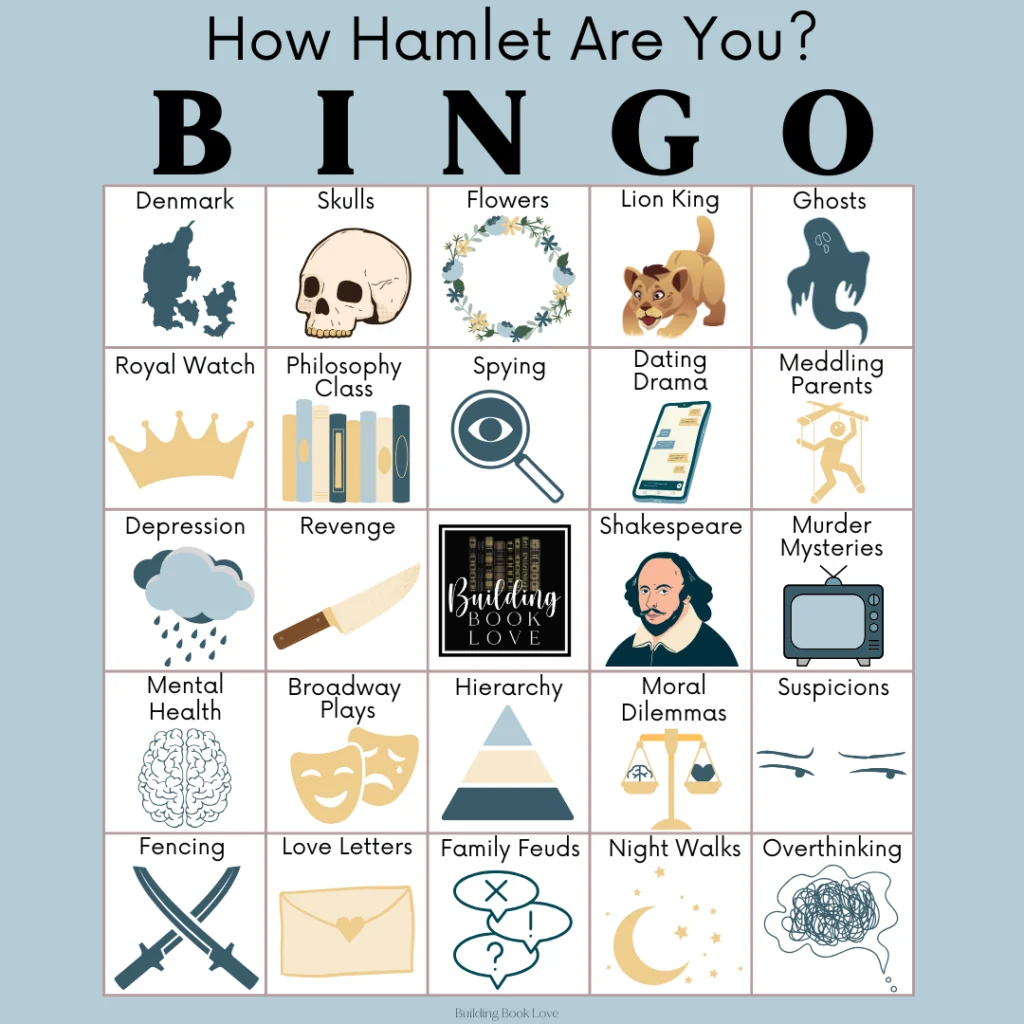
Did you know Disney’s Lion King parallels Hamlet? A murdered king, two brothers, and a prince—all familiar elements of Hamlet in the African savanna. This is what’s called an adaptation 🤓 Hopefully knowing Prince Simba will help you know Prince Hamlet. Hakuna matata!
In Shakespeare’s time, beliefs about ghosts, the afterlife, and purgatory were complicated and often disputed. Hamlet’s father’s ghost claims to be suffering in the afterlife and asks Hamlet to avenge his murder. Hamlet must decide whether to trust the ghost and whether revenge is morally right.
Hamlet repeatedly wrestles with the question of salvation. When he has a chance to kill Claudius while Claudius is praying, Hamlet worries that killing him then might send him to heaven. Hamlet is trying to take God’s judgment into his own hands.
Claudius has become king, even though Hamlet might have expected to succeed his father. The play suggests that Claudius has secured the support of the Danish court and people. Hamlet must now navigate a world where the crown has passed to his uncle.
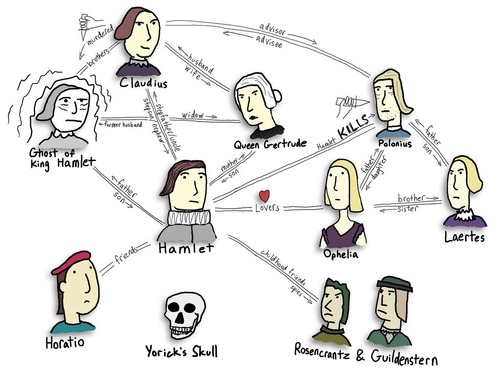
Watch this video to get the storyline straight 👍🏼
While you read, watch or listen to Hamlet, prepare yourself to consider these themes. Write your thoughts in your commonplace book.
Question 1: Loyalty vs. righteousness
Should Hamlet have listened to his father’s ghost, even though it asked him to commit a crime? Is it ever right to disobey someone you love or respect?
Tie-in: Does loyalty to someone ever conflict with loyalty to God? How do we know when someone we respect is asking us to do something unrighteous?
Question 2: Justice vs. Revenge
What other ways could Hamlet have investigated Claudius’s guilt before seeking revenge?
Tie-in: What is the difference between seeking justice and seeking revenge? Can we pursue something that is right using unrighteous methods?
Question 3: The Appearance of Righteousness
When Hamlet finds Claudius praying, why does Hamlet decide not to kill him? Do you think Hamlet’s reasoning makes sense? Why or why not?
Tie-in: Hamlet assumes that Claudius’s outward appearance of prayer means he is repentant. Can someone look righteous without actually being righteous? How do we distinguish outward appearances from the condition of someone’s heart?
Question 4: The Struggle to do What is Right
Why does Shakespeare let Hamlet question and delay his revenge instead of acting immediately? Does this make the play more interesting, or does it slow the story down? Use an example from the text.
Tie-in: Is Hamlet’s hesitation a sign of conscience, fear, indecision, or something else? When is it wise to pause before acting, and when does hesitation keep us from doing what is right?
Question 5: Where do We Turn for Guidance?
Who does Hamlet trust? Who does he turn to? Does he ever turn to God?
Tie-in: When we face difficult moral decisions, where should we turn for guidance? What does it mean to put on the breastplate of righteousness rather than relying on our own understanding?
Read or listen to the play!
BONUS
Watch the 1990 version of Hamlet with Mel Gibson. It is rated PG however, there are two scenes to skip!!!
- Timestamp 1:26:35 – 1:27:40 The director added a scene to the script. Queen Gertrude kisses her son Hamlet while they fight to try and stop him from harassing her. We don’t need to see this.
- Timestamp 1:32:14 – 1:44 When Ophelia goes mad then dies…we can skip this whole scene. Every director hits this event differently and this version is base and vulgar. What happens is Ophelia goes crazy and jumps off a bridge and drowns. Queen Gertrude watches this happening and comes back and shares. We jump back in when Hamlet is on his way home from England.
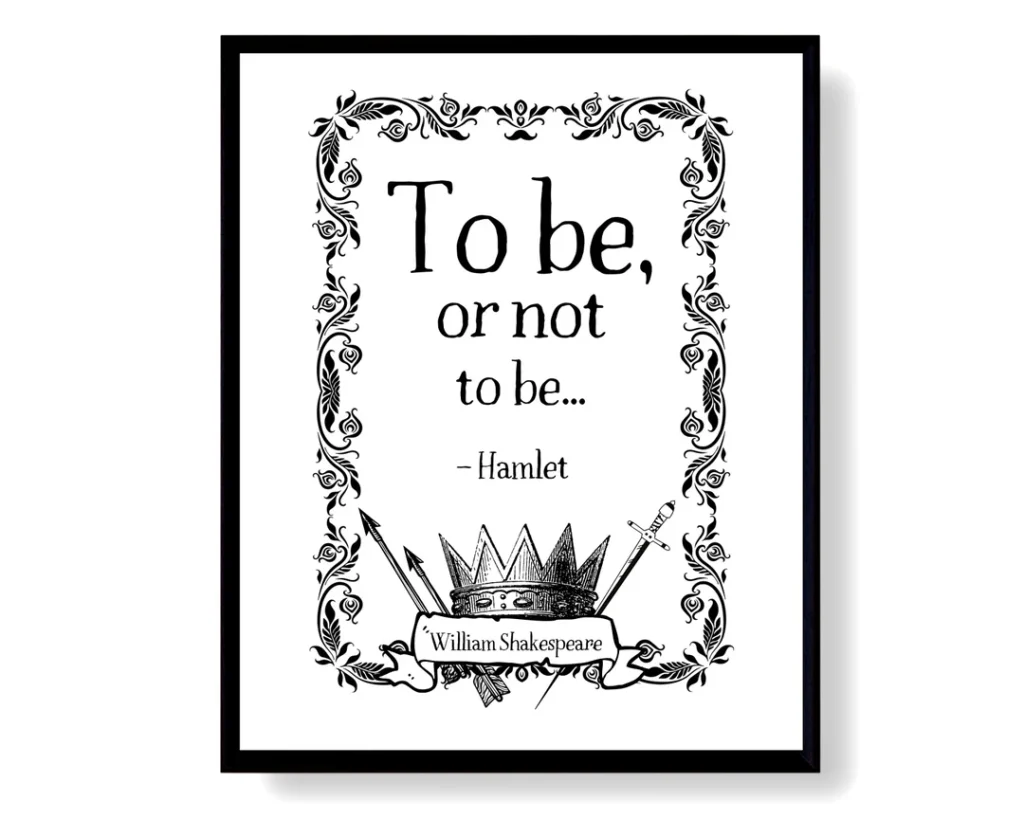
Monologue
Where you breathe makes a difference. It completes thoughts. It provides emphasis. It’s a lot like music! Please go through your monologue and circle all the punctuation marks. Simple. Bring it marked up to class.
Shakespeare wrote his characters’ emotions into the words. The words physically show their thoughts–you don’t have to guess what they are thinking or feeling–he straight up tells you as the actor what the character is experiencing. The punctuation marks are important clues. They can mark where a character’s thoughts continue, shift, or come to an end.
Read your monologue aloud at least five times. For your first few readings, try breathing only at punctuation marks. Notice how the punctuation shapes your thoughts and the rhythm of the speech. Circle any places where the meaning, phrasing, or need for breath makes you want to adjust. We’ll explore these choices together in class.
Writing an Introduction
Switching gears! Time to write ✒️
What does Shakespeare do to draw you right into the story? In Hamlet, we start with a Ghost. We’ve got mystery. We’ve got questions.
Have you ever trained for a long distance run? In the October 2026 General Conference, Elder Dunn spoke about training for an ultramarathon—a race of 100 miles. Four years before that race, he was attacked by a bear while running!
“More than once that fateful morning, I was sure I was going to die. The combination of seeing all that blood—my blood—soaking into the trail and sensing the ferocity of the grizzly bear raging at me from every side with its teeth and claws left me feeling overwhelmed and hopeless.”
Same principles! Pulling you in. Setting the stage. Creating a picture. Making you wonder.
Go ahead and read the rest of Elder Dunn’s story. It’s pretty miraculous. This article is in the FSY magazine…and is not the GC talk.
Elder Dunn was able to learn from his fateful mistake of not listening to the warning voice of the Spirit and the bear tracks.
If Hamlet could go back in time he’d do things differently too. It’s a gift for us to learn from his experiences and not make the same mistakes.
Introductions
Write four different opening paragraphs. You may use one topic for all four or choose a different topic for each. Your writing can begin a story or an informational piece. You do not need to finish the entire piece—your goal is to capture the reader’s attention.
- Funnel: Begin with a broad idea and gradually narrow it to your specific topic.
- Sportscaster: Describe an event as though you are a sports commentator giving a play-by-play. Use action, energy, and vivid details.
- Question or Dialogue: Begin with an intriguing question or a conversation that makes the reader want to know more.
- Setting: Use sensory details to place the reader in a specific time and place.
Aim for 3–6 sentences per introduction. We’ll share these in class, so choose topics you are comfortable discussing. Write them yourself without AI. I wrote mine all about Hamlet–you can change topics 👍
Funnel Example:
Hamlet is William Shakespeare’s longest play. Of the five different versions of the text, each one puts, “to be or not to be,” in a different spot in the play. Where the director places that famous line can emphasize a different perspective.
Sportscaster Example:
Hamlet and Laertes circle the floor. Swords drawn. Heavy breathing. Laertes thrusts his saber forward. It’s a miss. Hamlet side steps to the right with a tap to Laertes’ arm. It’s a hit. Point for Hamlet. The crowd goes wild…except for Claudius who’s suppressing his anger.
Question or Dialogue:
Do you know the longest Shakespeare play? Have you read it? Hamlet, although the longest, is also thought to be his best. With so many memorable quotes and character development, this broken classic has some very important messages. Let’s consider the consequences of revenge and how we can learn from Hamlet’s downfall.
Setting:
Damp cold stone walls soak in the wet air of the first watch. Black night surrounds the guards atop the Denmark castle fortification. An eerie light begins to glow in the middle of the walkway. Soldiers can’t believe what they see. Is it a ghost? It looks like the king.
Check List
Watch the 7:14-minute introduction video about Hamlet.
Read or listen to Hamlet as assigned.
Bonus: Watch the 1990 film version of Hamlet starring Mel Gibson. Skip the two scenes identified in the lesson.
Answer all five discussion questions in your commonplace book. Bring it to class.
Circle the punctuation marks in your monologue and bring the marked-up copy to class.
Read your monologue aloud at least five times, experimenting with breathing at punctuation marks.
Read Elder Dunn’s bear-attack story.
Write four different introductions, each 3–6 sentences long: funnel, sportscaster, question/dialogue, and setting. No AI.
Bring your Shakespeare Folder to class 😉
