
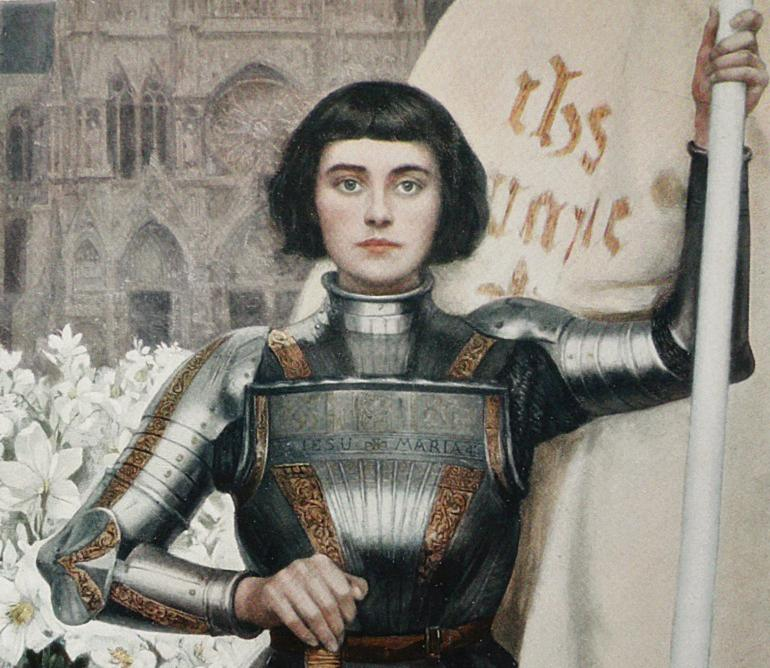
Wow what a women! So young and so steadfast.
Here is a little background for you. Joan was Catholic. When they talk about eucharist or communion they are referring to the sacrament. It is the most important point of a Catholic Mass. Mass is a church meeting like our sacrament meeting.
Things to think about while watching the documentary.
1. Why would God choose a peasant girl to accomplish such an important mission? Joan had very little education and couldn’t even read or write. What does her story teach us about whom God chooses to do His work?
2. How did the Hundred Years’ War affect France and its people? How might the suffering, uncertainty, and division within the country have prepared the people for someone like Joan of Arc?
3. How did Joan help persuade Charles to claim his throne? With King Charles VI suffering from mental illness and his son, the future Charles VII, hesitant and facing opposition, how did Joan give him the confidence to move forward? Why might God have chosen Joan to help him?
4. Why do you think God would use someone as young and inexperienced as Joan to influence a king? What advantages might she have had that powerful, educated, or experienced leaders did not?
5. Did you notice that Joan described being called three times during her first experience with the heavenly voice? Where else in the scriptures do we see someone being called by God three times?
6. How can we recognize the voice of God? How do we distinguish between our own thoughts, feelings, desires, and genuine spiritual guidance? How can we know whether an impression is coming from God?
7. How do you think Joan felt arriving in a large city to speak with royalty? Coming from a small farming village, what fears or insecurities might she have experienced? What gave her the courage to continue?
8. When Joan cut her hair short and began wearing men’s clothing and armor, what message do you think she was sending? Why would this have been so unusual and controversial in her day?
9. Nearly 600 years have passed since Joan of Arc lived, yet we still remember and discuss her. Why do you think her story has endured for so many centuries? What makes her different from countless other people who lived during that time?
10. Joan trained alongside experienced soldiers and, according to some accounts, demonstrated remarkable abilities despite her lack of military experience. What do you think made this possible? How might her determination, faith, and confidence have influenced her abilities?
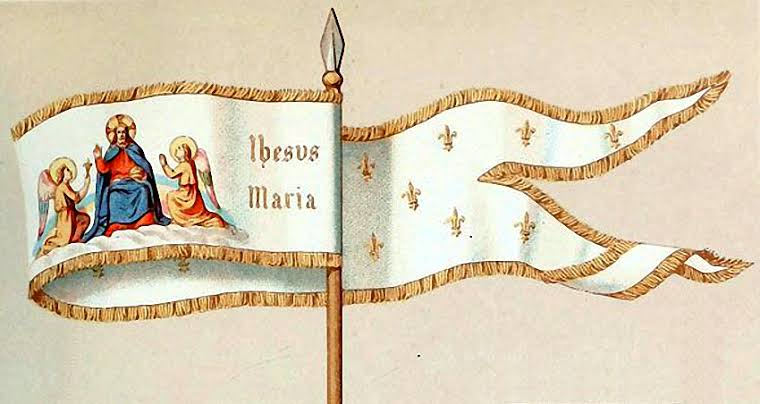
11. Why do you think Joan carried a religious banner into battle? What did its images and symbols represent? Why might the banner have been so important to Joan and the soldiers who followed her? Who else had a banner like that?
We don’t know what the banner looked like exactly but many people have made their best guess.
12. Joan identified a sword hidden at the Church of Saint Catherine in Fierbois. Why do you think the discovery of this sword was considered significant? How might the story have influenced people’s belief that Joan was receiving divine guidance? Do you believe it was miraculous?
13. Joan insisted that her soldiers attend religious services, confess their sins, avoid swearing, and change their behavior toward women. Why would she make these requirements of hardened, professional soldiers? What does this tell us about her understanding of the relationship between spiritual preparation and physical warfare?
14. Joan wanted her army to behave more like a righteous army of God than a typical medieval military force. What similarities do you see between her expectations and the armies of Israel described in the scriptures? Why might Joan have believed that the spiritual condition of her soldiers was just as important as their military training?
15. Joan claimed that heavenly voices warned her that she would be wounded and that her mission would be brief. Why do you think God might have allowed her to know these things in advance? How might knowing that she had limited time have influenced her determination to accomplish her mission?
17. What are your feelings about the final chapter of Joan’s life? After all she had accomplished for France, she was captured, imprisoned, and subjected to months of questioning during her religious trial. Why do you think her enemies were so determined to condemn her? What does her experience teach us about injustice and the abuse of power?
18. Joan was only 19 years old when she was burned at the stake. How do you feel about such a cruel ending to the life of someone who believed she was fulfilling God’s will? Why do you think God sometimes allows faithful people to experience tremendous suffering?
19. What do you think of the courage and composure Joan demonstrated during her execution? According to historical accounts, she asked that a cross be held where she could see it and called upon the name of Jesus as she died. What does this reveal about her faith, her character, and the source of her strength?
20. It took approximately 25 years after Joan’s death for the Church to overturn the judgment against her. Why do you think it took so long for her name to be cleared? What does this tell us about the difficulty of correcting an injustice after it has occurred?
21. Joan accomplished extraordinary things during her short life, yet she never lived to see the full results of her efforts. Do you think she fulfilled her mission? How do we measure success when someone sacrifices everything for a cause but does not live to see its completion?
22. If Joan of Arc could speak to us today, nearly 600 years later, what do you think she would want us to understand about her life? What is the most important lesson we can take from her example?
