
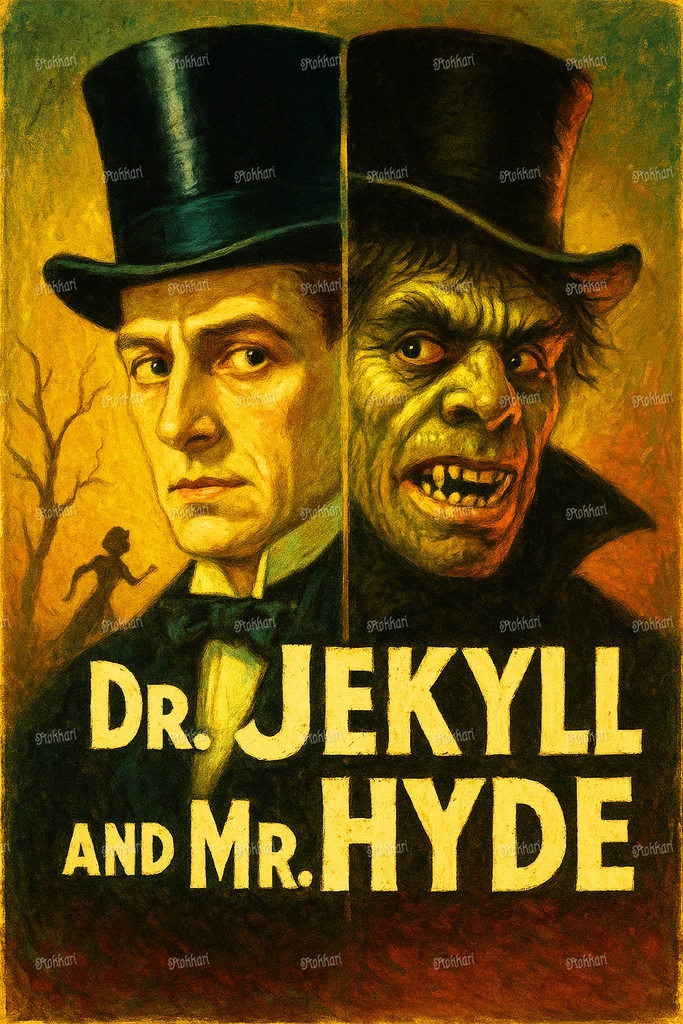
We get to start the spooky season this week!!
I found two different names for this book. The Strange Case of Dr. Jekyll and Mr. Hyde and Dr. Jekyll and Mr. Hyde are the same story. The full original title is Strange Case of Dr Jekyll and Mr Hyde, written by Robert Louis Stevenson and published in 1886!! Most people simply shorten the title.
Background of the Story

Author: Robert Louis Stevenson
Published: 1886
Setting: Victorian London, England
Genre: Gothic mystery, psychological horror, and philosophical fiction
Major themes: Good versus evil, identity, reputation, temptation, and personal responsibility
Victorian England and the Importance of Reputation
The story takes place during the Victorian era, when English society placed enormous importance on respectability, appearances, manners, and moral behavior.
People, especially those in the upper classes, were expected to maintain a spotless public reputation. But this often meant hiding their weaknesses, desires, and mistakes.
Stevenson explores an important question: What happens when people become more concerned with appearing good than actually being good?
The Idea That Everyone Has Two Sides
During the 1800s, philosophers, scientists, and writers were becoming increasingly interested in the human mind.
Stevenson explores the idea that every person has competing desires: the desire to do what is right and the temptation to do what is wrong.
Scientific Discoveries and Moral Boundaries
The late 1800s brought tremendous scientific advances. People were fascinated by what science might accomplish, but they were also concerned about scientists experimenting without considering moral consequences.
In the novel, science becomes a way to explore a larger question:
Just because human beings have the ability to do something, does that mean they should?
A Mystery Rather Than Just a Horror Story
One thing that makes this book so interesting is that Stevenson originally wrote it as a mystery.
Rather than telling readers everything immediately, he gradually reveals information through witnesses, conversations, letters, and strange events.
The Author’s Inspiration
Stevenson reportedly developed the central idea after a dream. He was also fascinated by stories of people who maintained respectable public lives while secretly behaving very differently.
The book became enormously popular and helped make the names Jekyll and Hyde synonymous with the contrasting sides of a person’s personality.
Questions to Ponder While Reading -Pick two to report to the group about
Is a person truly good if they only behave well because they are afraid of what others will think?
Think about the difference between having good character and maintaining a good reputation. Does the novel suggest these are always the same thing?
As you read, look for examples of characters struggling with competing desires. Is it possible to completely separate the good and bad parts of human nature?
Can keeping secrets change who a person becomes?
Notice how secrecy affects the relationships between characters. When is privacy healthy, and when does secrecy become destructive?
Are people responsible for the consequences of their experiments and choices, even when they didn’t intend the outcome?
What does the story suggest about the danger of giving in to our temptations?
Pay attention to the way seemingly small decisions lead to larger consequences. Can a person lose control over something they originally believed they could manage?
Extra Challenge
Pay attention to doors, windows, fog, darkness, and mirrors or reflections as you read. Stevenson uses descriptions of places and objects to create an atmosphere of mystery and suggest ideas about hidden identities. Bring an example of this!!
